Truck and Commercial Vehicle Accidents Are Different From Ordinary Car Accidents
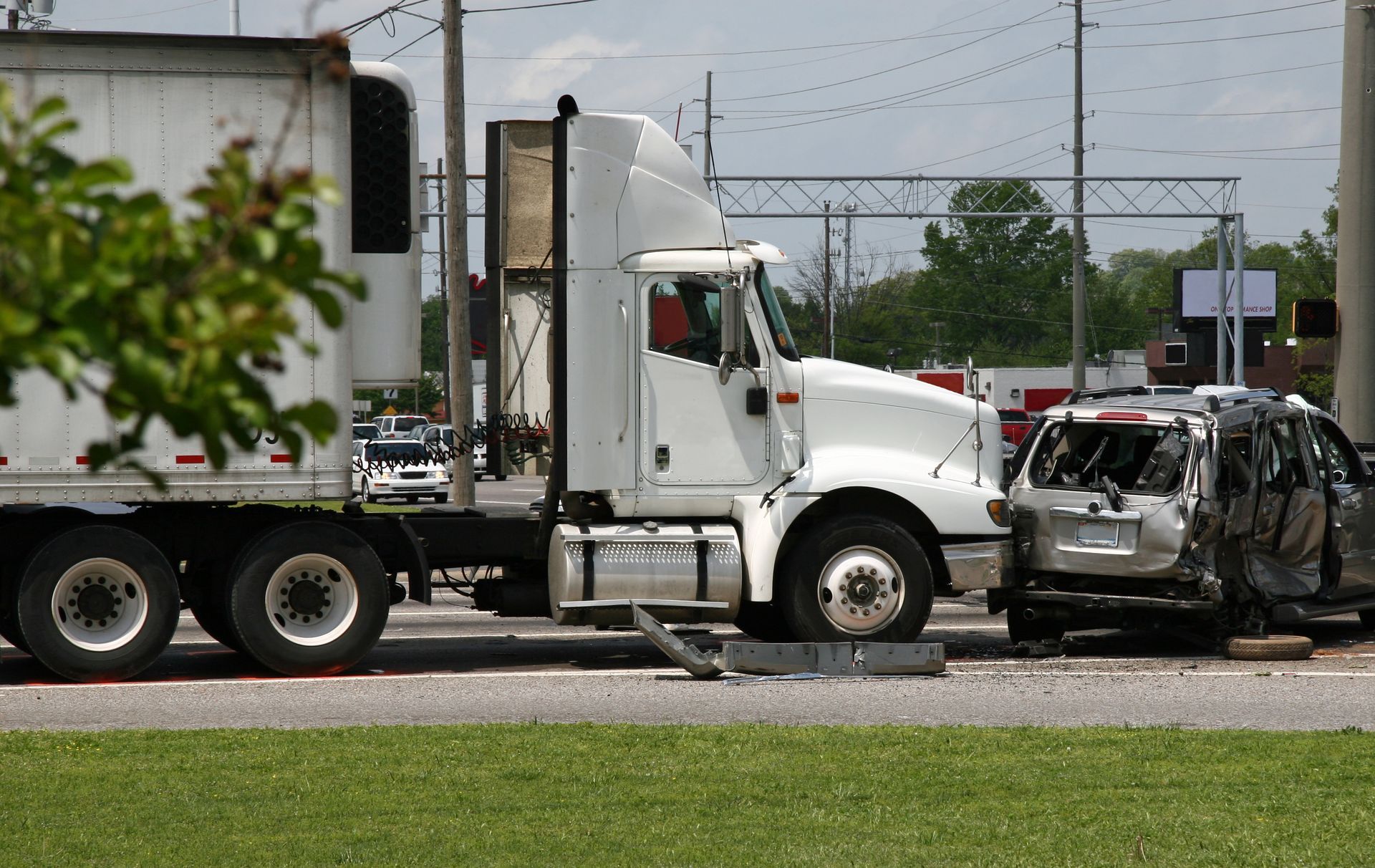
When a crash involves a tractor-trailer, box truck, delivery van, dump truck, construction vehicle, or other commercial vehicle, it is not just a bigger accident; it's usually a more complex legal case. Gaydos Law, P.C. recently obtained a $350,000 recovery for a client who was struck by a large dump truck. While every case is different and past results do not guarantee future outcomes, that case is an example of why commercial vehicle claims must be investigated carefully and handled with experience from the beginning.
Prior results do not guarantee a similar outcome. Every case depends on its own facts, injuries, liability, insurance coverage, and available evidence.
More Serious Injuries and Higher Stakes
Commercial vehicles are larger and heavier than passenger cars, often by tens of thousands of pounds. When they collide with a smaller vehicle or a pedestrian, the result is almost always more serious—broken bones, traumatic brain injuries, spinal injuries, internal injuries, or worse. Recoveries are longer, medical bills are higher, and the impact on a family—emotionally and financially—can last for years.
Because the stakes are higher, insurers and trucking companies move quickly to protect their own interests. Adjusters, in-house lawyers, and outside investigators may be involved within hours. Injured people who try to handle the claim on their own, or who delay getting legal advice, frequently find that the most important decisions have already been shaped against them. Prompt, experienced representation matters.
There May Be Multiple Responsible Parties
In an ordinary car accident, the focus is usually on one driver.
In a commercial vehicle case, fault may extend well beyond the person behind the wheel. Potentially responsible parties can include:
• The driver of the commercial vehicle
• The trucking company or employer
• The owner of the truck, trailer, or equipment (which may be a separate company)
• Maintenance or repair providers responsible for keeping the vehicle safe
• The loader of the cargo, or the company responsible for securing or balancing the load
• A broker, shipper, or logistics company that arranged the route or load
• A construction company, general contractor, or property owner on a worksite
• A manufacturer of a defective part, tire, brake, or component
• Those responsible for routing, scheduling, supervision, or dispatch decisions
A proper investigation has to look at each of these layers and ask the right questions: Was the driver properly trained and qualified? Was the truck inspected and maintained on schedule? Was there a known mechanical problem? Was the driver pushed to meet an unrealistic schedule? Was the cargo overloaded, improperly secured, or unsafe? Were safety rules followed? Has this driver or company had problems before?
Critical Evidence Can Disappear Quickly
Some of the most important evidence in a commercial vehicle case is controlled by the trucking company, the employer, or third parties—not by the injured person. Without prompt action, that evidence can be overwritten, discarded, or simply disappear. Examples include:
• Driver qualification files, applications, and background records
• Driver logs and hours-of-service records
• Dispatch records, load assignments, and communications
• GPS data showing route, speed, stops, and timing
• Black box / ECM (engine control module) data, including speed, braking, and throttle inputs
• Dashcam, in-cab camera, and nearby surveillance footage
• Maintenance and inspection records, including pre- and post-trip inspections
• Repair history and prior mechanical issues
• Vehicle inspection and out-of-service reports
• Cargo records, bills of lading, and weight tickets
• Cell phone records and electronic device usage
• Company safety policies, training materials, and handbooks
• Prior incidents, complaints, and safety violations
• Employment, training, and disciplinary records
To prevent destruction of this evidence, an experienced lawyer can send preservation letters — also called spoliation or litigation hold letters—putting the trucking company and other parties on formal notice that this information must be kept intact. The earlier those letters go out, the better the chance of preserving what really happened.
Commercial Vehicle Cases Often Involve Rules and Safety Standards
Commercial drivers and the companies that employ them are subject to safety rules and standards that do not apply to everyday drivers. These rules touch on hiring, training, supervision, driver qualification, hours of service, vehicle maintenance, cargo weight and securement, drug and alcohol testing, and more.
When a serious crash happens, the question is rarely just “who hit whom.” It often becomes: Was the driver hired and trained properly? Was the driver supervised and monitored? Was the truck maintained? Was it overloaded? Was the driver fatigued or distracted? Was the company putting profit, schedule, or speed ahead of safety?
Answering these questions usually requires more than a police report. It often takes accident reconstruction experts, trucking safety experts, medical experts, and others who can explain what should have happened and what actually did.
The Insurance Issues Can Be More Complicated
Commercial vehicle cases frequently involve more than one insurance policy. There may be a primary policy, an excess or umbrella policy on top of it, and separate coverage for the employer, a contractor, the tractor, the trailer, the cargo, or other parties. Coverage may be issued to different entities and may have different limits, exclusions, and conditions.
Insurance companies sometimes dispute which policy applies, in what order, and for how much. Identifying every available source of coverage—and forcing the right carriers to respond—is a critical part of getting an injured person fully and fairly compensated.
The Defense Usually Starts Immediately
Trucking companies and their insurers often deploy rapid-response teams to a crash scene. Investigators may be on site within hours to take photographs, measurements, and statements, and to begin examining the vehicles and downloading electronic data. Witness statements are taken. The narrative starts being built—and it is rarely built in the injured person’s favor.
Before giving a recorded statement, signing a medical authorization, or accepting any settlement offer, an injured person should consult with a lawyer. Once a statement is given or paperwork is signed, it is very difficult to undo.
The earlier counsel is involved, the more level the playing field becomes.
Why the Lawyer’s Experience Matters
Commercial vehicle cases are not ordinary car accident cases. They require more than basic personal injury experience—they require an understanding of trucking and commercial vehicle operations, safety rules, evidence preservation, expert work, and the way trucking insurers and defense lawyers operate. As noted above, Gaydos Law, P.C. recently obtained a $350,000 recovery for a client struck by a large dump truck.
Prior results do not guarantee a similar outcome. Every case depends on its own facts, injuries, liability, insurance coverage, and available evidence.
Speak With Gaydos Law, P.C. After a Truck or Commercial Vehicle Accident
If you or someone you love has been hurt in a crash involving a tractor-trailer, dump truck, box truck, delivery van, construction vehicle, or any other commercial vehicle, do not wait. Evidence can disappear. Statements can be taken out of context. Important deadlines and decisions arrive quickly.
Gaydos Law, P.C. represents people injured in truck and commercial vehicle crashes throughout Pennsylvania. We investigate aggressively, preserve evidence early, identify every responsible party, and pursue every available source of insurance coverage.
Call Gaydos Law, P.C. at 412-678-7900 today to discuss your case.
Prior results do not guarantee a similar outcome. Every case depends on its own facts, including the nature and extent of injuries, liability, available insurance coverage, and the evidence that can be developed and preserved. This material is for general information only and is not legal advice. No attorney-client relationship is formed by reading this material or by contacting the firm.